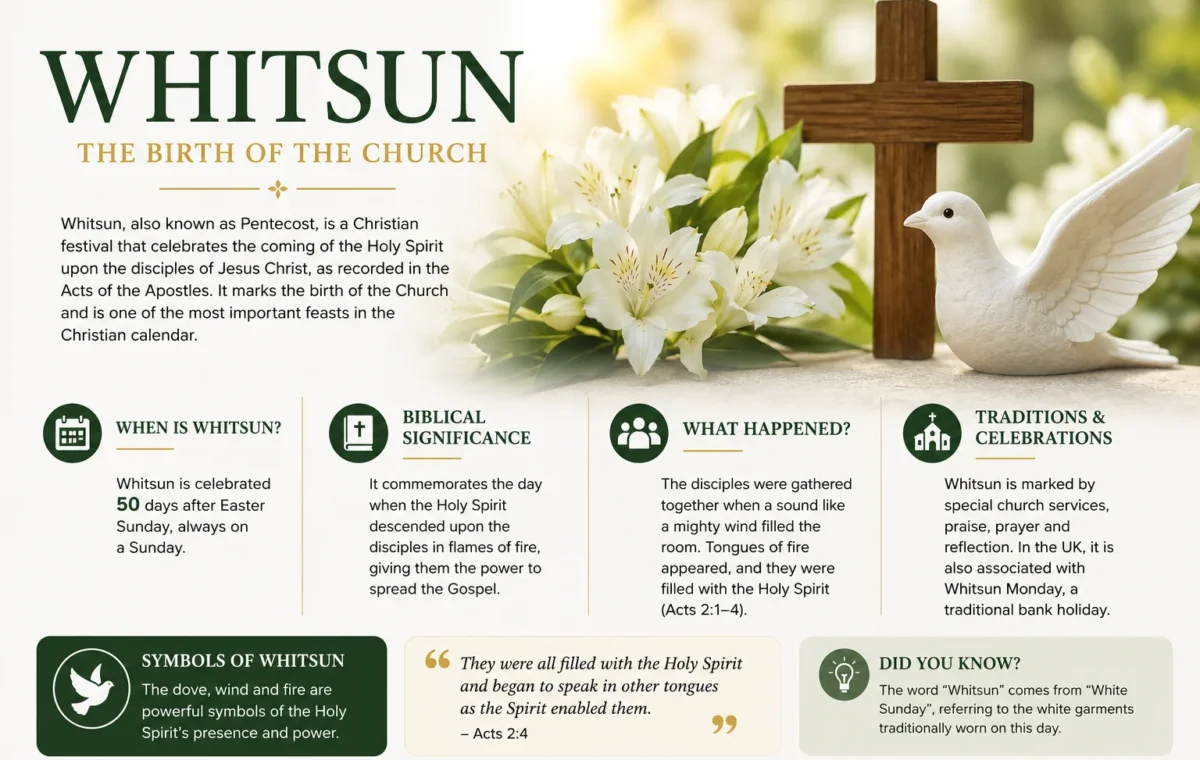
Whitsun is a Christian festival celebrated 50 days after Easter Sunday, marking the coming of the Holy Spirit upon the apostles, as described in the New Testament. Also known as Pentecost or Whitsunday, it has played an important role in the religious, cultural, and social history of the United Kingdom for centuries. Although many traditional Whitsun customs have changed over time, the festival remains significant for churches across the world.
- Quick Facts
- Table of Contents
- What Is Whitsun?
- What does Whitsun mean?
- Why is it called Whitsun?
- What does Whitsun celebrate?
- The History of Whitsun
- Biblical origins
- Whitsun in British history
- Why Whit Monday mattered
- How Whitsun Is Celebrated Today
- Church services
- Community traditions
- Global celebrations
- Whitsun vs Pentecost
- Are they the same thing?
- Why do some churches prefer Pentecost?
- Is Whitsun still important in 2026?
- Comparison Table
- Did You Know?
- Q: What is Whitsun?
- Q: Is Whitsun the same as Pentecost?
- Q: Why is Whitsun called Whitsun?
- Q: Is Whitsun still a public holiday in the UK?
- Q: Why is Whitsun important to Christians?
- Why Whitsun Still Matters
In this guide, you’ll discover what Whitsun means, why it’s celebrated, its biblical origins, how it differs from Pentecost, historical UK traditions, and whether it is still observed in 2026. Whether you’re researching the holiday or simply curious about its history, this article explains everything in clear, straightforward language.For more insights read here:- fly zapper and neville neville.
Quick Facts
| Fact | Details |
|---|---|
| Festival Name | Whitsun (Whitsunday) |
| Also Known As | Pentecost |
| Religion | Christianity |
| Celebrated | 50 days after Easter Sunday |
| Biblical Event | Descent of the Holy Spirit upon the apostles |
| Main Colour | Red (symbolising the Holy Spirit) |
| Traditional UK Holiday | Historically followed by Whit Monday |
| Still Celebrated? | Yes, mainly as Pentecost in churches worldwide |
Table of Contents
- What Is Whitsun?
- The History of Whitsun
- How Whitsun Is Celebrated Today
- Whitsun vs Pentecost
- Did You Know?
- Key Takeaways
- Frequently Asked Questions
What Is Whitsun?
What does Whitsun mean?
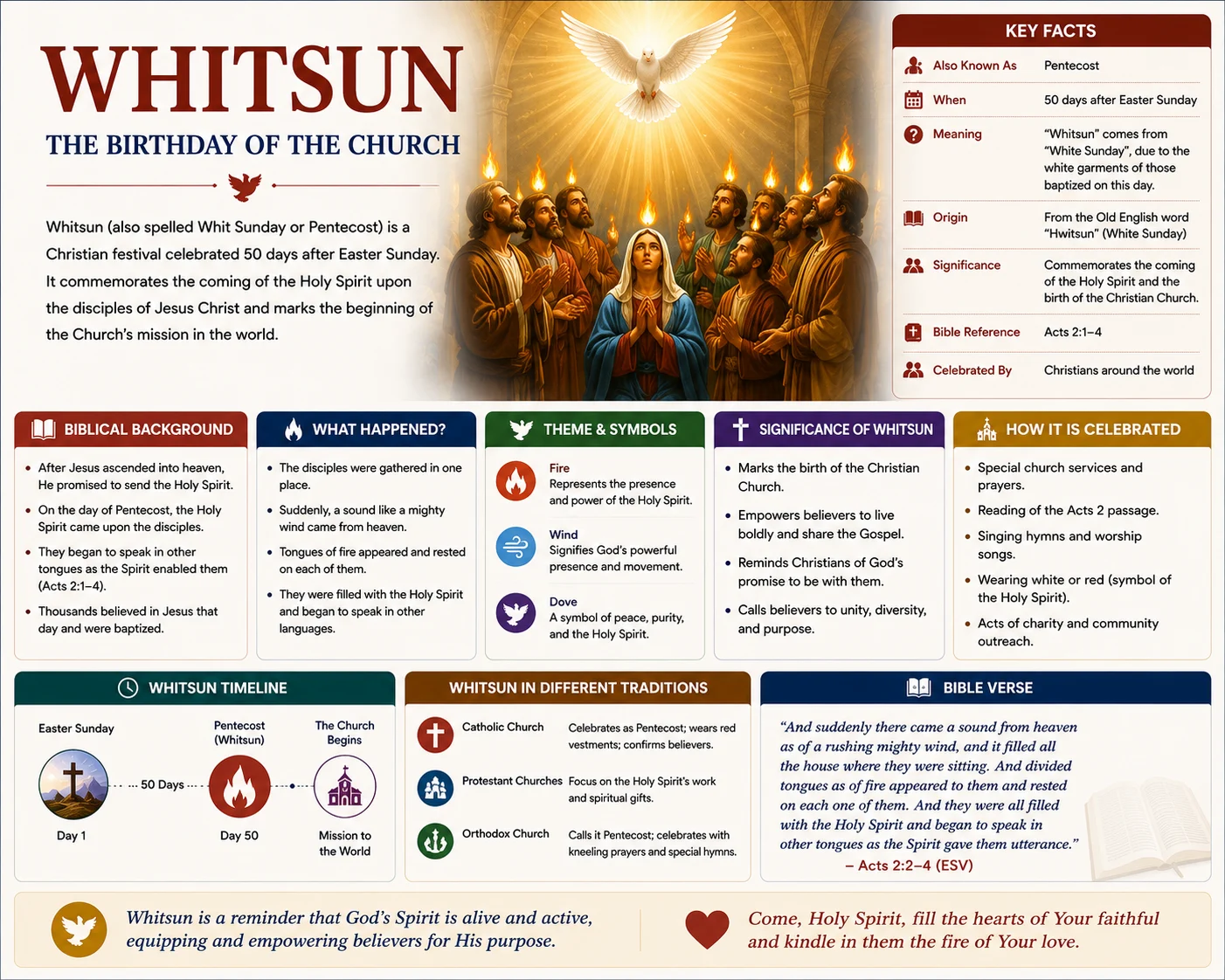
Whitsun is the traditional English name for Whitsunday, the Christian feast that commemorates Pentecost. It celebrates the moment when the Holy Spirit descended upon Jesus’ disciples, empowering them to preach the Christian message to people from many nations.
The event is recorded in the Book of Acts and is widely regarded as the beginning of the Christian Church’s public mission. Today, many churches simply refer to the day as Pentecost, although the historic name “Whitsun” remains familiar in Britain.Also explore:- biggest diamond in the world.
Why is it called Whitsun?
The exact origin of the name is still debated by historians. One common explanation is that newly baptised Christians traditionally wore white robes during the festival, leading to the term “White Sunday,” which gradually became Whitsunday.
Another theory links the name to old English words associated with wisdom or holiness. While scholars continue to discuss its precise origin, the “white garments” explanation remains the most widely accepted.
What does Whitsun celebrate?
At its heart, Whitsun celebrates three important Christian themes:
- The arrival of the Holy Spirit.
- The unity of believers from different cultures and languages.
- The beginning of the Church’s mission to spread Christianity.
For Christians, it represents guidance, renewal, faith, and spiritual strength rather than simply marking another date on the calendar.
The History of Whitsun
Biblical origins
According to the New Testament, Pentecost occurred fifty days after the resurrection of Jesus. While the disciples gathered in Jerusalem, they experienced a powerful wind and what appeared to be tongues of fire resting on each of them.
They began speaking in different languages, allowing visitors from many countries to understand their message. This event symbolised the spread of Christianity beyond one community to the wider world.
Whitsun in British history
Whitsun became one of the major festivals of the Christian calendar in medieval England. Churches held special services, baptisms, and community celebrations.
Over time, many towns organised fairs, parades, sporting events, and local festivals around Whitsun. Families often travelled, attended church together, and enjoyed one of the year’s important public holidays.
The period became known for community gatherings that blended religious observance with local traditions.
Why Whit Monday mattered
For many years, Whit Monday followed Whitsunday as an important public holiday in the United Kingdom.
It became popular for:
- Community fairs
- Family outings
- Brass band competitions
- Church processions
- Local sporting events
In 1971, the UK’s fixed Spring Bank Holiday replaced Whit Monday as a national bank holiday, although some communities continue to celebrate traditional Whit events.
How Whitsun Is Celebrated Today
Church services
Modern churches continue to observe Pentecost with special worship services.
Many churches decorate with red banners and flowers to symbolise the Holy Spirit’s fire. Readings from the Book of Acts are commonly included, while hymns focus on faith, renewal, and spiritual guidance.
Confirmation services and baptisms are also popular during this season.
Community traditions
Although many historical customs have become less common, some British communities still organise:
- Whit walks
- Church parades
- Brass band performances
- Community festivals
- Charity events
These celebrations help preserve local heritage while maintaining links to centuries-old traditions.
Global celebrations
Pentecost is celebrated throughout the Christian world.
Different countries observe it in unique ways:
- Large church festivals
- Public holidays in some European nations
- Family gatherings
- Outdoor processions
- Cultural performances
Despite regional differences, the central message remains the same: celebrating the Holy Spirit and the growth of Christianity.
For readers interested in other Christian traditions, our guides on Easter celebrations and Christmas traditions in the UK offer additional background.
Whitsun vs Pentecost
Are they the same thing?
Yes. Whitsun and Pentecost refer to the same Christian feast.
“Pentecost” comes from the Greek word meaning fiftieth, reflecting its position fifty days after Easter. “Whitsun” is the traditional English name that developed over many centuries.
Modern churches increasingly use Pentecost, while Whitsun remains common in historical discussions and British culture.
Why do some churches prefer Pentecost?
Many churches use Pentecost because it closely reflects the biblical terminology and is recognised internationally.
The term also avoids uncertainty over the historical meaning of “Whitsun,” making it clearer for modern congregations.
Both names, however, describe the same religious event.
Is Whitsun still important in 2026?
Absolutely.
While it may not receive the same public attention as Christmas or Easter, Pentecost remains one of Christianity’s major annual celebrations.
Churches across the UK and around the world continue to hold special services, and many believers regard it as a cornerstone of the Christian calendar.
Comparison Table
| Whitsun | Easter | Christmas |
|---|---|---|
| Celebrates the Holy Spirit | Celebrates the Resurrection of Jesus | Celebrates the birth of Jesus |
| 50 days after Easter | Spring festival | 25 December |
| Also called Pentecost | Most important Christian festival | Major Christian feast |
| Focus on the Church’s mission | Victory over death | Incarnation of Christ |
| Red often used in churches | White and gold common | Green, red and gold common |
Did You Know?
- The word Pentecost literally means “fiftieth,” referring to fifty days after Easter.
- Red vestments worn during Whitsun symbolise the flames described in the Book of Acts.
- Some traditional British Whit walks continue today, preserving customs that date back hundreds of years.
Key Takeaways
- Whitsun is another name for Pentecost.
- It commemorates the coming of the Holy Spirit upon the apostles.
- The celebration takes place 50 days after Easter Sunday.
- Whitsun played a major role in British religious and community life.
- Whit Monday was once a UK public holiday before being replaced by the Spring Bank Holiday.
- Churches worldwide continue to celebrate Pentecost in 2026.
- The festival symbolises faith, unity, renewal, and the beginning of the Christian Church.
- You may also enjoy reading our guides to British bank holidays and Christian festivals throughout the year.
Frequently Asked Questions
Q: What is Whitsun?
A: Whitsun is the traditional English name for Whitsunday or Pentecost. It is a Christian festival celebrated fifty days after Easter and marks the descent of the Holy Spirit upon Jesus’ disciples, an event recorded in the New Testament that symbolises the beginning of the Christian Church’s public mission.
Q: Is Whitsun the same as Pentecost?
A: Yes. Both names describe the same Christian celebration. “Pentecost” is the internationally recognised biblical term, while “Whitsun” is the historic English name that has been widely used in Britain for centuries.
Q: Why is Whitsun called Whitsun?
A: The most widely accepted explanation is that newly baptised Christians traditionally wore white robes during the festival. This practice is thought to have inspired the name “White Sunday,” which eventually became Whitsunday or Whitsun.
Q: Is Whitsun still a public holiday in the UK?
A: Whitsunday itself is observed by churches, but Whit Monday is no longer a UK bank holiday. Since 1971, it has been replaced by the fixed Spring Bank Holiday, although some communities continue to hold traditional Whitsun events.
Q: Why is Whitsun important to Christians?
A: Whitsun is important because it celebrates the coming of the Holy Spirit and the beginning of the Church’s mission to spread Christianity. It reminds believers of spiritual guidance, unity, faith, and the importance of sharing Christian teachings.
Why Whitsun Still Matters
Although modern life has changed many long-standing traditions, Whitsun remains an important part of the Christian calendar. Its message of faith, unity, renewal, and hope continues to resonate with millions of believers around the world. In the UK, the festival also offers a fascinating glimpse into centuries of religious and cultural history, from medieval church celebrations to Whit walks and community gatherings. Whether you know it as Whitsun or Pentecost, understanding its origins helps explain one of Christianity’s most meaningful annual observances and its lasting influence on British traditions.