A back support belt is often one of the first products people consider when dealing with lower back discomfort, recovering from minor strains, or performing physically demanding tasks. These belts are designed to provide support around the lumbar region, helping reduce excessive movement and encouraging better posture during certain activities.
- Quick Facts Table
- Understanding Back Support Belts
- What Is a Back Support Belt?
- How Does a Back Support Belt Work?
- Who Typically Uses Them?
- Benefits of Using a Back Support Belt
- Temporary Pain Relief
- Improved Postural Awareness
- Enhanced Confidence During Activity
- Types of Back Support Belts
- Elastic Lumbar Support Belts
- Rigid and Semi-Rigid Braces
- Industrial and Occupational Belts
- Comparison Table: Types of Back Support Belts
- Choosing the Right Back Support Belt
- Consider Your Specific Needs
- Focus on Fit and Comfort
- Evaluate Material and Design
- Safe Use and Best Practices
- Avoid Overdependence
- Combine Belt Use With Exercise
- Know When to Seek Medical Advice
- What Does Research Say?
- Evidence for Pain Relief
- Limited Evidence for Injury Prevention
- Individual Response Matters
- Did You Know?
- Key Takeaways
- FAQ Section
- Q: Does a back support belt actually help with back pain?
- Q: Can I wear a back support belt all day?
- Q: Which back support belt is best for lifting?
- Q: Is a back support belt good for posture?
- Q: Can a back support belt prevent injuries?
- Conclusion
However, many people wonder whether back support belts actually work or if they’re simply a temporary fix. The truth lies somewhere in between. While they can offer short-term relief and additional stability, they are not a substitute for strengthening exercises, proper lifting techniques, or medical treatment when needed.
In this guide, you’ll learn how back support belts work, who may benefit from them, their limitations, how to choose the right one, and how to use them safely.
Quick Facts Table
| Topic | Details |
|---|---|
| Topic Name | Back Support Belt |
| Category | Orthopedic Support Device |
| Main Purpose | Provide lumbar support and temporary stability |
| Best For | Lower back strain, physical work, certain recovery periods |
| Popular Variations | Elastic belts, rigid braces, posture belts, industrial belts |
| Difficulty Level | Easy to use |
| Maintenance Level | Low |
| Key Benefits | Support, compression, posture awareness, comfort |
| Trend Status | Widely used worldwide |
| Related Topics | Core strengthening, posture correction, lifting techniques |
Understanding Back Support Belts
What Is a Back Support Belt?
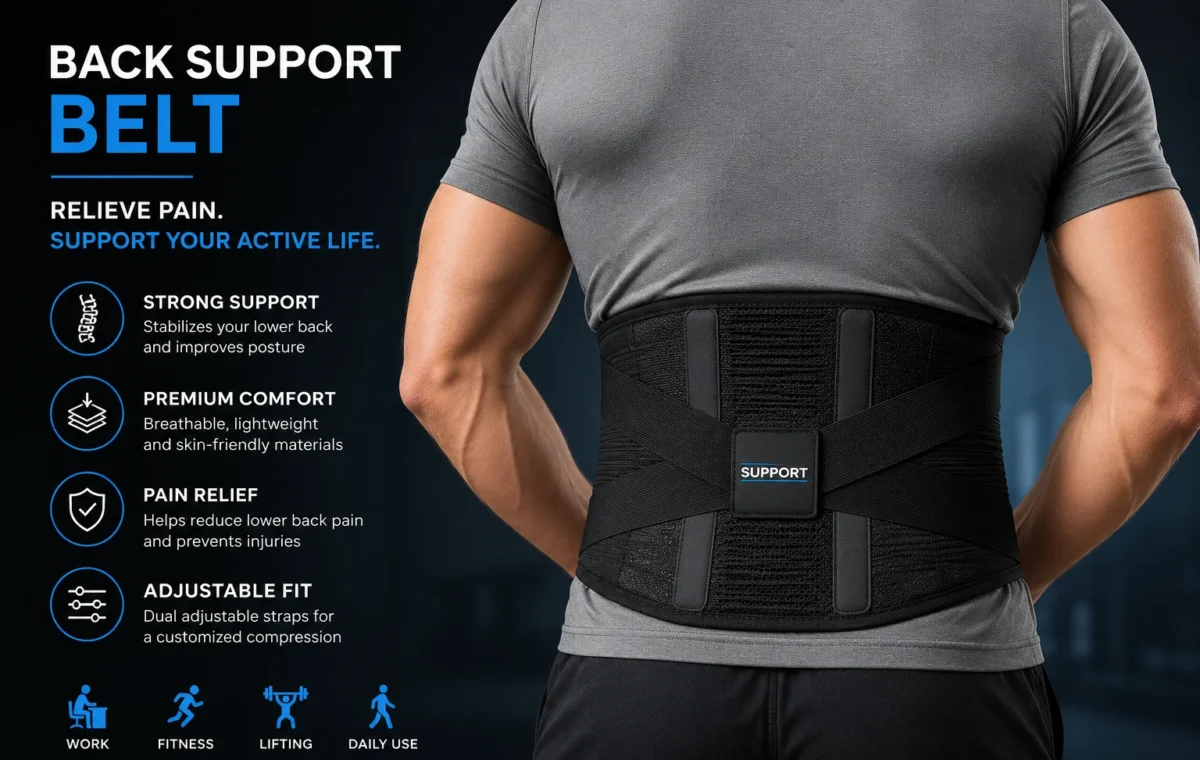
A back support belt is a wearable device designed to wrap around the lower back and abdomen. Most models use adjustable straps to provide compression and support to the lumbar area.
These belts come in various styles. Some are soft and flexible, while others contain rigid inserts that limit movement more significantly. The right option depends on the user’s needs, activity level, and healthcare recommendations.
How Does a Back Support Belt Work?
Back support belts primarily work by increasing abdominal pressure and providing external support to the lower spine. This can reduce stress on certain structures during movement.
They may also improve body awareness. Many users become more conscious of posture and lifting mechanics when wearing a belt, helping them avoid movements that could worsen discomfort.
Who Typically Uses Them?
People from different backgrounds use back support belts for different reasons.
Common users include:
- Individuals experiencing temporary lower back pain
- Workers involved in lifting and repetitive movements
- People recovering from mild back strains
- Those advised by healthcare providers after specific injuries
- Individuals seeking added support during certain activities
Benefits of Using a Back Support Belt
Temporary Pain Relief
One of the main reasons people choose a back support belt is to manage short-term discomfort. The compression and stability may help ease symptoms during daily activities.
Many users report feeling more comfortable when standing for extended periods, walking, or performing tasks that previously aggravated their back pain. However, results vary from person to person.
Improved Postural Awareness
A back support belt doesn’t force perfect posture, but it can act as a reminder to maintain healthier movement patterns.
Users often become more mindful of:
- Keeping their spine aligned
- Avoiding sudden twisting motions
- Using proper lifting techniques
- Maintaining balanced body mechanics
For additional support, readers may benefit from our expert tips for improving posture naturally.
Enhanced Confidence During Activity
Back pain often leads to fear of movement. Some individuals hesitate to exercise, work, or complete everyday tasks because they worry about worsening their symptoms.
A properly fitted belt may provide reassurance during recovery periods. This psychological benefit can help people gradually return to normal activities while following professional advice.
Types of Back Support Belts
Elastic Lumbar Support Belts
Elastic belts are among the most common options available. They provide gentle compression and flexibility without severely limiting movement.
These are often chosen by individuals seeking mild support during daily activities, light exercise, or occasional episodes of back discomfort.
Rigid and Semi-Rigid Braces
Rigid braces include structured components such as plastic panels or metal stays. These provide greater stability and movement restriction.
Healthcare professionals sometimes recommend these braces after certain injuries or surgical procedures. They should generally be used under medical supervision due to their restrictive nature.
Industrial and Occupational Belts
Industrial belts are marketed toward workers who frequently lift heavy objects or perform repetitive physical tasks.
Although some users appreciate the added support, research has not consistently shown that workplace belts prevent back injuries in healthy workers. Proper training and ergonomic practices remain essential.
Comparison Table: Types of Back Support Belts
| Feature | Elastic Belt | Semi-Rigid Brace | Rigid Brace |
|---|---|---|---|
| Flexibility | High | Moderate | Low |
| Compression | Moderate | Moderate to High | High |
| Movement Restriction | Minimal | Moderate | Significant |
| Daily Comfort | Excellent | Good | Fair |
| Typical Use | Mild support | Recovery support | Medical conditions |
| Best For | General activities | Moderate symptoms | Physician-directed care |
| Ease of Wear | Easy | Moderate | More complex |
Choosing the Right Back Support Belt
Consider Your Specific Needs
Not all back pain has the same cause. Choosing the right belt starts with understanding why you need support.
Ask yourself:
- Is the discomfort temporary or chronic?
- Do you need support during work?
- Has a healthcare provider recommended a brace?
- Will you wear it occasionally or regularly?
The answers help narrow your options considerably.
Focus on Fit and Comfort
A poorly fitted belt can do more harm than good. Belts that are too tight may cause discomfort, while loose belts may fail to provide adequate support.
Look for features such as:
- Adjustable straps
- Breathable materials
- Multiple sizing options
- Comfortable edges
- Easy fastening systems
Evaluate Material and Design
Modern designs prioritize comfort and practicality. Lightweight fabrics reduce overheating and irritation during extended wear.
If you’re active throughout the day, choosing moisture-wicking materials and flexible construction can improve compliance and comfort.
You may also find our complete guide to ergonomic workplace habits helpful for reducing strain.
Safe Use and Best Practices
Avoid Overdependence
One of the biggest concerns surrounding back support belts is prolonged reliance.
Extended daily use without strengthening the surrounding muscles may contribute to reduced muscle engagement over time. Belts are generally intended as supportive tools rather than permanent solutions.
Combine Belt Use With Exercise
Core strength plays a major role in spinal stability.
Healthcare professionals often recommend combining temporary support with exercises targeting:
- Abdominal muscles
- Lower back muscles
- Hip stabilizers
- Gluteal muscles
- Flexibility and mobility
Consider reading our beginner’s guide to core strengthening exercises for additional support.
Know When to Seek Medical Advice
Back pain occasionally signals more serious conditions.
Consult a healthcare professional if you experience:
- Severe or worsening pain
- Numbness or tingling
- Weakness in the legs
- Loss of bladder or bowel control
- Fever accompanying back pain
- Pain following major trauma
Prompt evaluation helps rule out underlying problems requiring specialized treatment.
What Does Research Say?
Evidence for Pain Relief
Research findings remain mixed regarding the effectiveness of lumbar supports.
Some studies suggest short-term improvements in function and symptom management among certain individuals, while others show little difference compared with standard care alone.
Limited Evidence for Injury Prevention
Evidence does not consistently support using back support belts to prevent workplace injuries among healthy individuals.
Experts generally agree that belts should not replace:
- Safe lifting techniques
- Ergonomic improvements
- Strength training
- Education programs
Individual Response Matters
Despite mixed scientific findings, many people report subjective benefits from wearing a back support belt during flare-ups or physically demanding tasks.
This highlights the importance of individualized care. What works well for one person may offer little benefit to another.
Did You Know?
💡 A back support belt may improve awareness of posture, encouraging safer movement habits.
💡 Many healthcare professionals recommend using belts only during specific activities rather than throughout the entire day.
💡 Strengthening your core muscles is considered one of the most effective long-term strategies for supporting spinal health.
Key Takeaways
- A back support belt provides temporary lumbar support and compression.
- It may help reduce discomfort during certain activities.
- Belts can improve awareness of posture and movement patterns.
- Long-term dependence without exercise is generally discouraged.
- Different belt styles serve different purposes.
- Proper fit significantly affects comfort and effectiveness.
- Core strengthening remains essential for long-term back health.
- Persistent or severe symptoms require medical evaluation.
FAQ Section
Q: Does a back support belt actually help with back pain?
A: A back support belt may provide temporary relief for some individuals by offering compression and stability. However, effectiveness varies. It works best as part of a broader approach that may include exercise, activity modification, and professional guidance.
Q: Can I wear a back support belt all day?
A: Wearing a back support belt continuously is generally not recommended unless directed by a healthcare provider. Prolonged use may reduce reliance on your natural stabilizing muscles. Most people benefit from using it only during specific activities.
Q: Which back support belt is best for lifting?
A: Elastic or occupational support belts are commonly used during lifting activities. The ideal choice depends on comfort, fit, and individual needs. Proper lifting mechanics remain more important than the belt itself.
Q: Is a back support belt good for posture?
A: A back support belt can encourage better posture awareness by reminding users to maintain proper alignment. However, it does not permanently correct posture and should be combined with strengthening and mobility exercises.
Q: Can a back support belt prevent injuries?
A: Current evidence does not consistently show that back support belts prevent injuries in healthy individuals. They should not replace safe workplace practices, ergonomic adjustments, or conditioning programs.
Conclusion
A back support belt can be a valuable tool when used appropriately. It may offer temporary relief, increased confidence during activity, and improved awareness of posture. However, it is not a cure for back pain or a guaranteed method of preventing injury.
The most effective approach combines short-term support with healthy movement habits, proper lifting techniques, regular exercise, and medical guidance when necessary. By understanding the benefits and limitations of these devices, you can make informed decisions that support both immediate comfort and long-term spinal health.