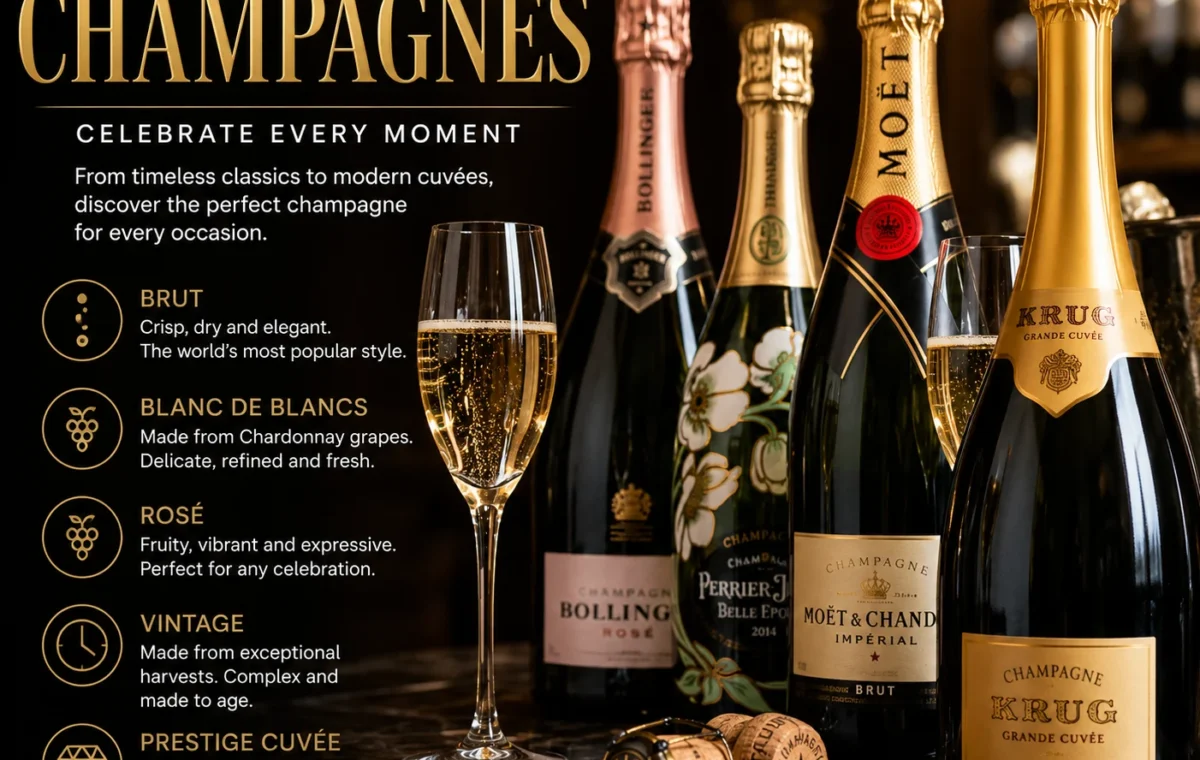
Champagnes remain the benchmark for sparkling wine, celebrated for their elegance, complexity and association with celebrations around the world. Unlike many sparkling wines, Champagne can only be produced in the Champagne region of north-eastern France under strict regulations. That protected status is one reason it continues to enjoy a reputation for exceptional quality.
- Table of Contents
- What Makes Champagnes Unique?
- Protected Origin Matters
- Traditional Production Creates Fine Bubbles
- Three Main Grape Varieties
- Different Types of Champagnes
- Brut Champagne
- Blanc de Blancs and Blanc de Noirs
- Rosé and Vintage Champagne
- Choosing the Right Champagne
- Consider the Occasion
- Understand Sweetness Levels
- Budget Doesn't Always Determine Quality
- How to Serve and Store Champagne
- Serve at the Right Temperature
- Choose Appropriate Glassware
- Proper Storage Extends Quality
- Champagne vs Other Sparkling Wines
- Did You Know?
- Q: What makes champagnes different from sparkling wine?
- Q: Which champagnes are best for beginners?
- Q: Can champagnes age after purchase?
- Q: What foods pair well with champagnes?
- Q: Why are some champagnes more expensive than others?
- Final Thoughts
Whether you’re choosing a bottle for a wedding, comparing styles, or simply curious about what makes Champagne different from Prosecco or Cava, understanding the basics can make buying far easier. This guide explains how champagnes are made, the different styles available, food pairings, storage tips and how to choose the right bottle for every occasion.For more insights read here:- ben elton and tennis shorts.
| Quick Facts | Details |
|---|---|
| Category | Sparkling wine |
| Protected Region | Champagne, France |
| Main Grapes | Chardonnay, Pinot Noir, Pinot Meunier |
| Production Method | Traditional Method (Méthode Champenoise) |
| Typical Alcohol | Around 12% ABV |
| Best Served | Chilled (around 8–10°C) |
| Famous Styles | Brut, Rosé, Blanc de Blancs, Blanc de Noirs, Vintage |
Table of Contents
- What Makes Champagnes Unique?
- Different Types of Champagnes
- Choosing the Right Champagne
- How to Serve and Store Champagne
What Makes Champagnes Unique?
Protected Origin Matters
Champagne is more than a sparkling wine—it’s a legally protected name. Only sparkling wines produced within the Champagne region of France and following strict production rules may use the name “Champagne.”
These regulations cover everything from grape varieties to ageing requirements, helping maintain consistent quality. This protected designation also explains why Champagne generally costs more than many other sparkling wines.Also explore:- mick harford.
Traditional Production Creates Fine Bubbles
Champagne is produced using the traditional method, where a second fermentation takes place inside each bottle. During this process, yeast creates natural carbonation, producing the fine, persistent bubbles Champagne is known for.
After ageing on the yeast sediment, the wine develops richer flavours including brioche, toasted nuts and fresh pastry alongside citrus and orchard fruit notes.
Three Main Grape Varieties
Most champagnes are made from one or more of these grapes:
- Chardonnay adds freshness, citrus notes and elegance.
- Pinot Noir contributes structure, body and red fruit flavours.
- Pinot Meunier offers fruitiness and approachable character.
Winemakers blend these grapes in different proportions to create their distinctive house styles.
Different Types of Champagnes
Brut Champagne
Brut is the most widely available style. It is dry but balanced, making it suitable for almost every occasion.
Its versatility means it pairs equally well with seafood, poultry, creamy dishes and many appetisers. For first-time buyers, Brut is often the safest choice.
Blanc de Blancs and Blanc de Noirs
Blanc de Blancs is made entirely from Chardonnay grapes. It tends to be lighter, fresher and more mineral, making it ideal with oysters, shellfish and lighter fish dishes.
Blanc de Noirs is produced using black grapes—Pinot Noir, Pinot Meunier or both—while remaining a white sparkling wine. It generally offers greater richness and fuller fruit flavours.
Rosé and Vintage Champagne
Rosé Champagne stands out for its attractive pink colour and flavours of strawberries, raspberries and cherries. It is popular for celebrations and pairs beautifully with salmon, duck and berry desserts.
Vintage Champagne is made from grapes harvested in a single exceptional year. Rather than blending multiple harvests, producers release vintage bottles only when conditions justify it, often resulting in greater complexity and ageing potential.
Choosing the Right Champagne
Consider the Occasion
Different celebrations suit different bottles.
A casual gathering may call for a reliable non-vintage Brut, while anniversaries, milestone birthdays and weddings often justify a premium vintage Champagne.
For gifting, elegant presentation boxes from established Champagne houses can add extra appeal.
Understand Sweetness Levels
Not every Champagne tastes the same.
| Sweetness Level | Taste Profile |
|---|---|
| Brut Nature | Very dry |
| Extra Brut | Very dry with slight softness |
| Brut | Dry and balanced |
| Extra Dry | Slightly sweeter than Brut |
| Sec | Noticeably sweet |
| Demi-Sec | Sweet, dessert-friendly |
Many buyers assume “Extra Dry” is drier than Brut, but it actually contains slightly more residual sugar.
Budget Doesn’t Always Determine Quality
Prestige cuvées command premium prices, but many non-vintage champagnes offer outstanding quality.
Smaller grower-producers also create exceptional wines that showcase individual vineyards and distinctive winemaking styles, sometimes providing excellent value compared with internationally recognised luxury labels.
For readers interested in entertaining, our wine pairing guide and holiday hosting ideas can provide additional inspiration.
How to Serve and Store Champagne
Serve at the Right Temperature
Champagne shows its best aromas when served chilled but not ice-cold.
Around 8–10°C allows delicate fruit and bakery notes to emerge while keeping the bubbles lively. Over-chilling can reduce aroma and flavour.
Choose Appropriate Glassware
While traditional flutes remain popular, many wine professionals now favour tulip-shaped glasses.
These glasses preserve bubbles while allowing aromas to concentrate, creating a more enjoyable tasting experience.
Wide coupe glasses look elegant but allow carbonation to escape more quickly.
Proper Storage Extends Quality
Store unopened bottles horizontally in a cool, dark place with consistent temperatures.
Avoid direct sunlight, excessive heat and repeated temperature changes, which can negatively affect wine quality over time.
Once opened, Champagne is best enjoyed promptly, although a quality sparkling wine stopper can help preserve bubbles for another day.
For more beverage advice, explore our food and drink guides.
Champagne vs Other Sparkling Wines
| Feature | Champagne | Prosecco | Cava |
|---|---|---|---|
| Origin | Champagne, France | Italy | Spain |
| Production | Traditional Method | Tank Method | Traditional Method |
| Typical Flavour | Brioche, citrus, apple | Pear, peach, floral | Citrus, almond |
| Bubble Style | Fine and persistent | Lighter | Fine |
| Typical Price | Premium | Budget to mid-range | Mid-range |
Did You Know?
- Champagne can only legally be called Champagne if it comes from the Champagne region of France.
- Most Champagne sold worldwide is non-vintage, created by blending wines from multiple harvests for consistency.
- The traditional production method creates naturally fine bubbles through a second fermentation inside each bottle.
Key Takeaways
- Champagnes are protected sparkling wines produced exclusively in France’s Champagne region.
- Chardonnay, Pinot Noir and Pinot Meunier are the primary grape varieties.
- Brut remains the most popular and versatile style.
- Vintage Champagne is produced only in exceptional harvest years.
- Proper serving temperature greatly improves flavour and aroma.
- Tulip-shaped glasses often enhance the tasting experience.
- Understanding sweetness levels helps you select the right Champagne.
- Quality champagnes can suit everything from casual dinners to major celebrations.
FAQ
Q: What makes champagnes different from sparkling wine?
A: Champagne is a sparkling wine, but not every sparkling wine is Champagne. The name is legally protected and only wines produced in France’s Champagne region using strict production rules may use it. This protected origin and traditional production method help create Champagne’s distinctive character.
Q: Which champagnes are best for beginners?
A: A non-vintage Brut Champagne is usually the best starting point. It offers balanced acidity, refreshing fruit flavours and broad food compatibility. It also represents the signature style of most Champagne producers without requiring a significant investment.
Q: Can champagnes age after purchase?
A: Many non-vintage bottles are intended for enjoyment within a few years of purchase. Vintage and prestige Champagnes often have greater ageing potential when stored correctly in cool, stable conditions away from sunlight and excessive heat.
Q: What foods pair well with champagnes?
A: Champagne pairs beautifully with oysters, shellfish, smoked salmon, roast chicken, soft cheeses and many appetisers. Rosé Champagne complements salmon, duck and berry-based desserts, while sweeter styles work well with fruit desserts.
Q: Why are some champagnes more expensive than others?
A: Price differences reflect factors including vineyard location, production methods, ageing time, vintage quality, brand reputation and limited availability. Longer ageing and prestige cuvées generally require greater investment during production, contributing to higher retail prices.
Final Thoughts
Champagnes continue to represent quality, craftsmanship and celebration in 2026. Their protected origin, traditional production methods and remarkable diversity of styles ensure there’s a bottle suitable for almost every occasion. Whether you prefer the crisp freshness of Blanc de Blancs, the richness of Blanc de Noirs or the versatility of a classic Brut, understanding the key differences makes choosing with confidence much easier. With proper serving, storage and thoughtful food pairings, Champagne offers an experience that extends far beyond special occasions and remains one of the world’s most respected sparkling wines.